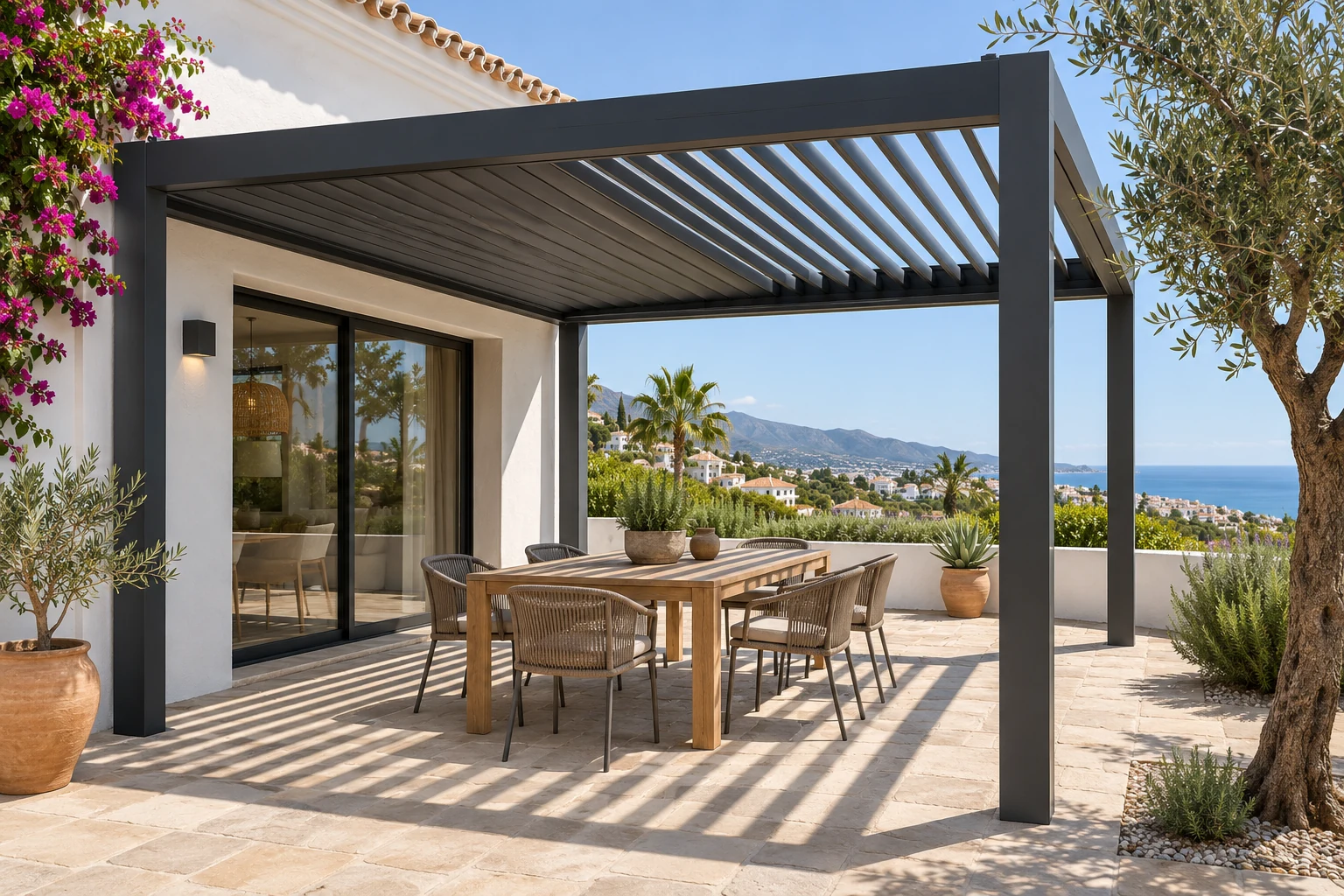
A louvred pergola works best when its settings match the way you use your terrace. A position that shades the dining table at lunchtime may allow sunlight onto the sofa later in the day. On the Costa del Sol, separate two decisions: choosing the structure's position before installation and adjusting its louvres during everyday use. There is no single angle that suits every garden, roof design or time of year.
1. Start with the space where you will sit
Draw a simple plan showing the table, loungers or outdoor sofa. Add doors, windows, trees and neighbouring buildings that already provide shade. The important area is where people will spend time, which may not be the centre of the proposed pergola. Include enough room to move chairs and open doors comfortably.
Photograph that area from the same point at several times on a clear day. Record the date and time. Looking again in another season helps prevent a decision based only on a winter shadow. A sun-path application can support this exercise, but its diagram still needs checking against the actual walls, roof edges and trees.
2. Check the louvre axis before ordering
The axis around which the blades rotate, their width and their permitted movement affect how the roof intercepts sunlight. Some kits offer specific configuration choices; others are designed to be assembled in one arrangement. Read the drawing and manual for the exact reference before deciding where the posts should stand.
A blanket instruction to face every pergola in the same compass direction is not enough. The façade, garden layout and intended hours of use also matter. Moving an installed structure or swapping a mechanism to the opposite side requires checking the manufacturer's instructions, the supporting surface and drainage. It is not simply an adjustment to make after assembly.
3. Adjust the roof by watching the shade below
In calm weather, operate the roof using its control or handle as described in the manual. Make small changes and watch the strips of sunlight across the table or seating area. Find a position that blocks direct sun where you need it, rather than choosing a setting only because the roof looks attractive from below.
If a partly open position creates uncomfortable patches of sunlight, try another setting within the approved range. Opening the blades further does not automatically make the space feel cooler: it can allow ventilation while admitting more direct sunshine. Keep suitable airflow paths clear and check the result again as the sun moves.
4. Recognise sunlight entering from the side
Low sunlight can pass beneath the roof edge even when the louvres are closed. This often becomes noticeable when you want to use a seating area facing the afternoon sun. Repeatedly adjusting the roof may not solve a problem caused by light entering horizontally from an open side.
A compatible screen or panel may help, but assess it before ordering. It has its own fixing requirements, clearance needs and operating limits. Enclosing the sides also changes airflow and exposure to wind. Choose accessories approved for the particular model and follow their instructions instead of adding an improvised fabric panel.
5. Build useful routines and follow weather instructions
Where the system allows it, note two or three useful positions for your usual activities. Establish these after several trials and review them as the season changes. The best lunchtime setting may be unsuitable for reading in the late afternoon. A household routine should reflect the property rather than a universal angle chart.
For rain, wind or extended absence, follow the instructions for your exact product. Protective roof positions vary and sensors are not present on every model. Keep gutters clear and check that nothing obstructs the moving parts. If you hear unusual noises or encounter resistance, stop operating the mechanism and arrange a check.
6. Make the most of a pre-installation visit
Have the product link, assembly manual and your sunlight photographs ready. A visit should bring these together with the furniture layout, door openings, supporting surface and water outlet positions. A useful shade solution must also allow correct installation, straightforward operation and access for maintenance.
Shade does not remove all ultraviolet radiation from the surrounding space. Spain's weather agency, AEMET, recommends checking the UV index and using protection, particularly around the middle of the day. Do not treat a louvred roof as complete sun protection. Reviewing these points before purchasing makes it easier to select a kit that suits the terrace.
Choose the position that shades the area you are actually using, within the manufacturer's permitted settings. Observe, test and adjust again as the sun and seasons change.