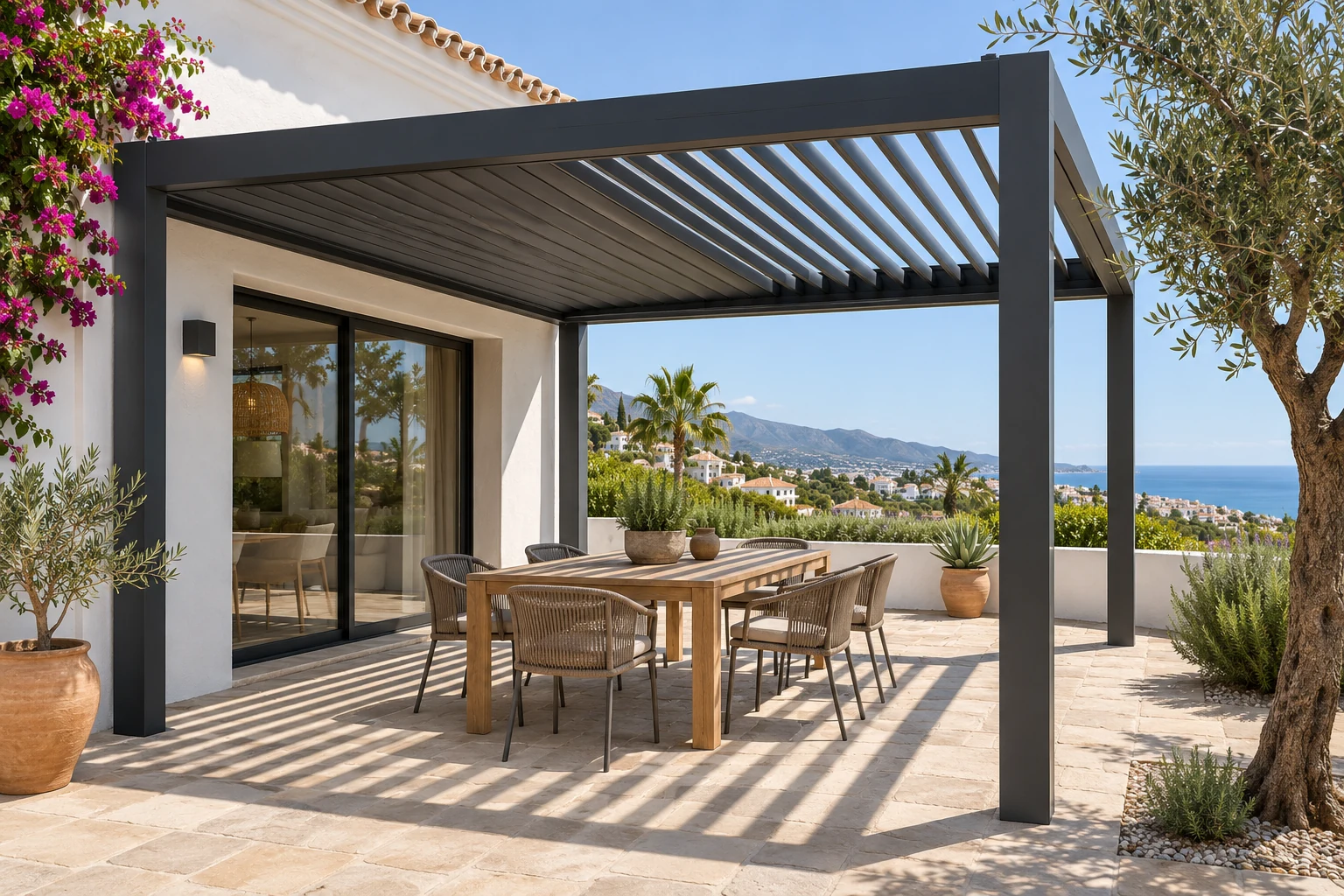
A six-leg pergola may have up to 24 fixing points when each foot plate has four holes. Chemical anchors with threaded rods can suit particular models and substrates. They are not an automatic upgrade, and resin does not turn a drilled terrace into a fully waterproof surface. The manual, the layers beneath the paving and a compatible fixing system all need checking before any drilling begins.
1. What is a chemical anchor?
A chemical fixing system uses an injection mortar or resin in a prepared hole, together with a compatible threaded rod. Once cured, the system transfers loads between the rod and the base material. The resin, rod, diameter and embedment depth work as a system; choosing a cartridge by brand name alone does not establish the capacity of the fixing.
The system manufacturer specifies approved substrates, compatible components and installation conditions. Hole size and cleaning, temperature and curing time all matter. If the specified preparation is skipped, an incompatible part is used or the anchor is loaded before curing, the result may differ from the intended performance.
2. Possible advantages over the kit’s supplied screws
The fixings supplied with a pergola are intended for the conditions described in its manual. If the surface and installation match those conditions, they may be the right choice. A chemical system can provide a bonded threaded-rod connection and avoid the expansion pressure produced by some mechanical anchors. This can suit certain concrete bases when the system is approved for the substrate and the loads involved.
That does not mean resin is always stronger, safer or more appropriate. Hollow material, a weak screed, a nearby edge or a wind-exposed structure can change the fixing design. The number of anchors alone does not certify wind resistance either. We follow the product and fixing-system instructions and do not present a replacement as structural certification.
3. Twenty-four points on a six-leg pergola
If each of six foot plates has four holes, the service can cover up to 24 fixing points: four per leg. Each rod is selected to suit the plate holes, kit geometry, substrate and approved fixing solution. Nuts and washers must also suit the plate and outdoor conditions; near the coast, we check the corrosion protection specified for the materials.
Before work, we confirm that the holes line up with the plates, the base is sound and there are no hidden services in the drilling path. The visible tile does not reveal whether the layer underneath is structural concrete, insulation, screed or a waterproof membrane. If we cannot identify a suitable substrate, we pause and agree an assessment or additional preparation with you.
4. Levelling the structure and raising lower legs
A sloping terrace should not be corrected by filling gaps with extra resin. First, we measure the difference and check what the pergola design allows. Where the model and base permit it, the lower legs may be raised slightly with adjustable plates or supports designed to carry the load. This helps align the frame without forcing joints or obstructing drainage.
We do not use improvised wedges or routinely cut the posts. A larger height difference may require base preparation, engineered supports or separate building work before assembly. We agree the levelling scope after the site visit and keep it within the manufacturer’s limits and the stability of the frame.
5. Resin and sealing are not total waterproofing
An injection mortar may bond the rod and fill the drilled hole in a substrate approved by its manufacturer. If the surface and waterproofing system permit, the perimeter around the foot plate can then be treated with a compatible sealant. That surface detail can help limit water entry around the base, but it does not replace a membrane, a designed flashing or a roof repair.
On a roof terrace, drilling may pass through tiles, screed, insulation or a waterproofing layer. A bead of silicone or resin around a nut does not restore the continuity of a damaged membrane. The existing system must be identified and its manufacturer’s compatible detail followed; some cases need a waterproofing specialist. For that reason, we do not promise “total watertightness” without an inspection and a suitable construction detail.
6. Premium service: up to 24 fixings from €690
For a six-leg pergola, CostaMontaje offers a package from €690 for up to 24 chemical fixing points with threaded rods, adjustment for minor level differences by raising lower legs on compatible supports, and compatible surface sealing around the bases. The starting price assumes straightforward access and a suitable structural concrete base. We confirm it after reviewing the product and site.
The assessment checks the manual, foot-plate dimensions and ground type. Membrane repairs, masonry, structural calculations and special supports are outside this price and are quoted separately before any work. If the supplied fixings suit the site and you prefer to keep them, we can assemble the kit to its manual without this upgrade.
7. What to send before asking for a quote
Share the product link and manual, close-up photographs of all six foot plates, a wide view of the terrace and any information you have about its construction or waterproofing. Tell us if the manufacturer specifies particular anchors. This helps us assess whether a chemical system is worth considering, whether the supplied fixings are appropriate or whether the terrace owner needs to be consulted first.
The free visit lets us agree the scope, limitations and fixed quote before work begins. If the substrate, slope or waterproofing does not allow a compatible and safe fixing, we will explain the issue and wait until there is a clear solution before drilling.
Chemical fixing can suit a compatible substrate, but resin cannot correct every level difference or guarantee a waterproof terrace. For six legs and up to 24 points, the service starts at €690 and is confirmed after checking the model and base.