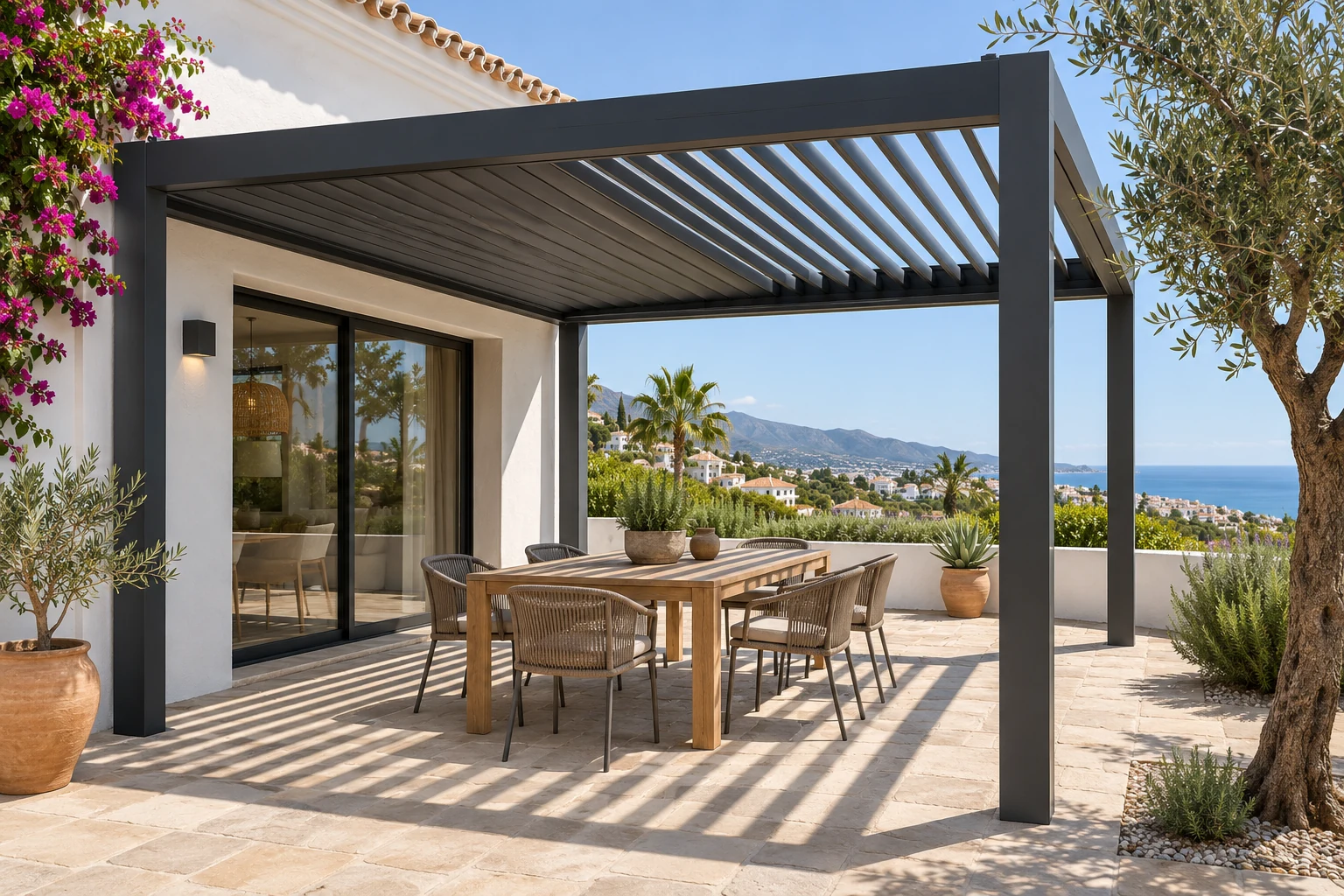
Choosing a pergola colour on the Costa del Sol deserves more thought than comparing two catalogue pictures. White often sits naturally beside Mediterranean façades, while anthracite grey or black can connect with modern window frames. The coating, visible dirt and the sunlight reaching the structure also matter. Aim for a finish that suits the property and is practical to care for, without assuming that a colour name guarantees particular performance.
1. Colour affects the surface, but it is not the whole story
With other conditions equal, a light finish usually reflects more sunlight than a conventional dark finish and may therefore become less hot in the sun. The coating's composition and properties also matter. Some dark coatings use reflective pigments, but the manufacturer needs to document that performance; it cannot be assumed from the colour description.
The temperature of an aluminium profile is also different from the temperature of the air beneath it. Comfort depends on effective shade, ventilation and nearby surfaces as well. A fixed temperature improvement for a white pergola over a black one would require comparable testing of the same product, rather than borrowing results from unrelated roofs or materials.
2. When white makes sense
White is a natural starting point if you want a pergola to sit quietly against a light façade, a bright courtyard or a Mediterranean-style terrace. Beams and posts may blend more easily with white walls. If the structure is close to the house, check the view from indoors too: you will probably see it through those windows every day.
Ask for a sample or reliable photographs of the actual finish. A warm white can look quite different from a cool white beside cream stone or an older painted wall. Check whether the frame and louvres share the same shade. Screens and edited images can change colours, so try to make the final choice in natural daylight.
3. When to choose anthracite grey or black
Anthracite can work well with dark window frames, metal railings and contemporary details. Black produces a stronger contrast. Both may suit a pergola intended to be a clearly defined feature in the garden. Compare it with permanent architectural elements, rather than matching only the cushions or outdoor furniture that you may replace next season.
Look closely at matte or textured finishes and ask how replacement components are supplied. A colour code is helpful, but texture and gloss also affect the match. If you prefer dark posts with pale louvres, confirm that the manufacturer offers this original configuration. Do not plan to repaint a new kit without first checking its product conditions.
4. Consider the marks you will actually see
No colour removes the need for cleaning. Pale dust and water marks may contrast with a dark coating, while other marks show sooner against white. Texture and lighting change how noticeable they are. If irrigation sprinklers reach the installation area, check their coverage first: preventing repeated splashes can be more effective than choosing another colour.
For a home near the sea, ask whether the finish is suitable for that exposure and what care it requires. Colour does not certify resistance to a marine environment. Request the manufacturer's instructions on cleaning, inspections and warranty conditions, particularly if the property will be empty for months without anyone maintaining the outside space.
5. Keep the care routine simple and compatible
Start with the manual for the exact model. Some manufacturers specify particular products, cleaning schedules and compatible treatments. Avoid experimenting with abrasive pads or solvents to remove a stain. Use approved methods and do not apply products to very hot profiles or in direct sunlight where the care instructions advise against it.
Include gutters and outlets in your regular checks. Keeping the structure looking clean and keeping it functioning correctly are related, but separate, tasks. Photograph any impact damage, coating chip or deteriorated fixing and seek advice before covering it with generic paint. An appropriate repair needs to respect the coating and the way the kit was manufactured.
6. Answer five questions before ordering
What colour and gloss are your existing window frames? How much direct sunlight reaches the structure? Do you want it to blend in or become a feature? Who will clean it while you are away? What finish documentation does the manufacturer provide? These answers are more useful than comparing similar-sounding catalogue colour names.
For a discreet addition to a white façade, start by testing white. With dark frames and a stronger architectural outline, compare anthracite and black. These are design suggestions rather than technical rules. The finish should accompany the right size, shading, supporting base and installation. Send the product link and photographs of the location if you would like help assessing the arrangement before buying.
Choose a colour that suits the property and verify the coating's quality and care requirements. For comfort, assess shade and ventilation together; colour alone cannot determine the result.